
Nerve Blocks and Beyond
Editor: Samer Narouze MD, PhD
- First book on interventional management of head and face pain
- Edited and written by world class authorities
- Full range of procedures, from nerve blocks for head and face pain to peripheral and central neuromodulation
- Practical, step-by-step guidance for performing each procedure
Ultrasound guidance for peripheral nerve blocks is now well established in the field of Regional Anesthesia (USRA). 1 Recently, we started to see a growing in- terest in using ultrasound to guide different procedures in interventional pain management (USPM). 2-4
The difference between USRA and USPM is obvious. In USRA, we are com- paring ultrasound guidance to other “blind” nerve localization techniques e.g. nerve stimulation or surface landmarks. On the other hand, in USPM we are comparing ultrasound guidance to other “imaging” techniques e.g. fluoroscopy (or CT scan). So, to advocate the use of ultrasound (US) in interventional pain management, US had to offer more advantages than what the traditional fluo- roscopy can offer.
Read more: Ultrasound Guidance for Interventional Pain Management of Cervical Pain Syndromes
Chapter: Diagnosing and Understanding Adult Headache
by A. Feoktistov, M. Diamond
- Primary headache disorders are the most common forms of headaches.
- Taking a good history and performing thorough physical and neurologic examination are mandatory in evaluation of patients with headache.
- Unusual age of onset, sudden change in the headache pattern, headache deterioration, and lack of response to therapy, as well as presence of systemic symptoms such as fever and weight loss should warrant further diagnostic work-up.
Read more: Headache in Otolaryngology: Rhinogenic and Beyond
Chapter: Sumatriptan 6 mg subcutaneous as an effective migraine treatment in patients with cutaneous allodynia who historically fail to respond to oral triptans
by S. Diamond, F. G. Freitag, A. Feoktistov, G. NissanAlexander Feoktistov
The objective of the study was to assess the efficacy of 6 mg subcutaneous (SC) sumatriptan to treat migraine and the relationship between response of migraine and cutaneous allodynia in a population of migraine patients who historically failed to respond to oral triptan medications. This was an openlabel study consisting of patients with migraines who historically failed to respond to oral triptan medications. Forty-three patients were asked to treat three migraine attacks with 6 mg SC sumatriptan.
Chapter: How to Improve Needle Visibility
by D. Souzdalnitski, I. Lerman, T. Halaszynski
There are many advantages to the use of ultrasound in interventional pain medicine procedures. Ultrasound technology is currently growing exponentially due to its many advantages of improved and real-time high-resolution ultrasound imaging that results in successful pain management interventions. In addition, use of ultrasound for interventional pain management procedures avoids the many risks associated with radiation exposure to both the patient and practitioner.
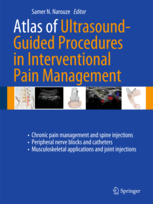
Read more: Atlas of Ultrasound-Guided Procedures in Interventional Pain Management
Chapter: Oxymorphone extended-release
by S. Levin, I. Lerman
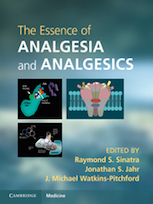
The Essence of Analgesia and Analgesics is an invaluable practical resource for clinicians giving pain relief in any clinical setting, describing the pharmacologic principles and clinical use of all available pain medications. As well as detailed overviews of pain processing and analgesic theory, sections are dedicated to oral and panteral opioid analgesics, neuraxial opioids, NSAIDs, local anesthetics, anticonvulsant type analgesics, NMDA antagonists, alpha adrenergic analgesics, antidepressant analgesics, muscle relaxants, adjuvant medications, and new and emerging analgesics.
Chapter: Treatments for Post-traumatic Stress Disorder: Pharmaceutical and Electrophysiologic Considerations
By: D. G. Baker, I. Lerman, E. Espejo, R. McLay
Most individuals who experience traumatic events remain asymptomatic or symptoms resolve quickly, but in a minority who develop post-traumatic stress disorder (PTSD), symptoms can persist for decades and can be associated with psychiatric and medical co-morbidities and poor social and occupational functioning. Currently, first-line pharmacotherapies are selective serotonin reuptake inhibitors (SSRIs) and serotonin-norepinephrine reuptake inhibitors (SNRIs) for core symptoms and in individuals with unremitting nightmares, prazosin, is commonly used and often effective. This review appraises these commonly used evidence-based treatments and their conceptual underpinnings.